SINBAD Sponsor Meeting
Date
-
-
June 15th, 2007
-
Vancouver Fall date still to be determined
-
Location
-
-
BG Energy Holdings Limited
-
100 Thames Valley Park Drive
-
Reading, Berkshire
RG6 1PT UK -
Phone +44 (0)118 935 3222
-
Map: Directions
Email: Debbie Burgess
-
Department of Earth & Ocean Sciences
-
6339 Stores road
-
Vancouver, BC
-
-
Tel: +1 604 822 5674
-
Fax: +1 604 822 5674
Website
SINBAD
Seismic Imaging by Next-Generation Basis Functions Decomposition




SLIM NEWS
-
‣Slides not yet available
-
Presentation slides will be uploaded and available in ‘Program’ tab.
-
-
‣DNOISE
-
Dynamic nonlinear optimization for imaging in seismic exploration (DNOISE) is funded by the Natural Sciences and Engineering Council of Canada (NSERC).
-
-
DNOISE matched dollar-for-dollar the industrial funding received by the Seismic Laboratory for Imaging and Modeling. The total contribution from NSERC for three years is $700k. We would like to thank everybody involved to make this happen.
-
-
Executive Summary DNOISE:
-
-
Dynamic nonlinear optimization for imaging in seismic exploration (DNOISE) is a multidisciplinary research project involving faculty members from the Mathematics, Computer Science, and Earth and Ocean Sciences departments at the University of British Columbia. DNOISE aims at one of the most pressing questions in the oil and gas industry namely ---"How to image more deeply and with more detail?" This pressing question needs to be answered if our energy-intensive society is to adequately address the current surge in demand for hydro-carbon resources.
-
-
DNOISE operates at the intersection of information, optimization and seismic theory, and aims to provide answers to the basic questions "What accuracy is attainable given a certain seismic acquisition?", and "How can we improve the acquisition to obtain a certain accuracy?" To answer these questions, DNOISE will leverage recent results from information theory, known as uniform uncertainty principles. These recently discovered principles constitute a new paradigm since they provide explicit conditions under which (seismic) data can be recovered from incomplete and noisy measurements. As part of DNOISE, we plan to leverage these results towards a large suite of outstanding problems in seismic imaging that range from the canonical deconvolution problem to the removal of coherent signal components and amplitude recovery.
-
-
DNOISE derives its potential from the development of signal representations that are sparse and optimization techniques that promote this sparseness. This combination is exploited in DNOISE's formulation of the seismic imaging problem, leading to an improved image quality, including explicit estimates for the image accuracy, i.e., the error.
-
-
‣LIMA HPC cluster (Laboratory for Imaging and MAthematics)
-
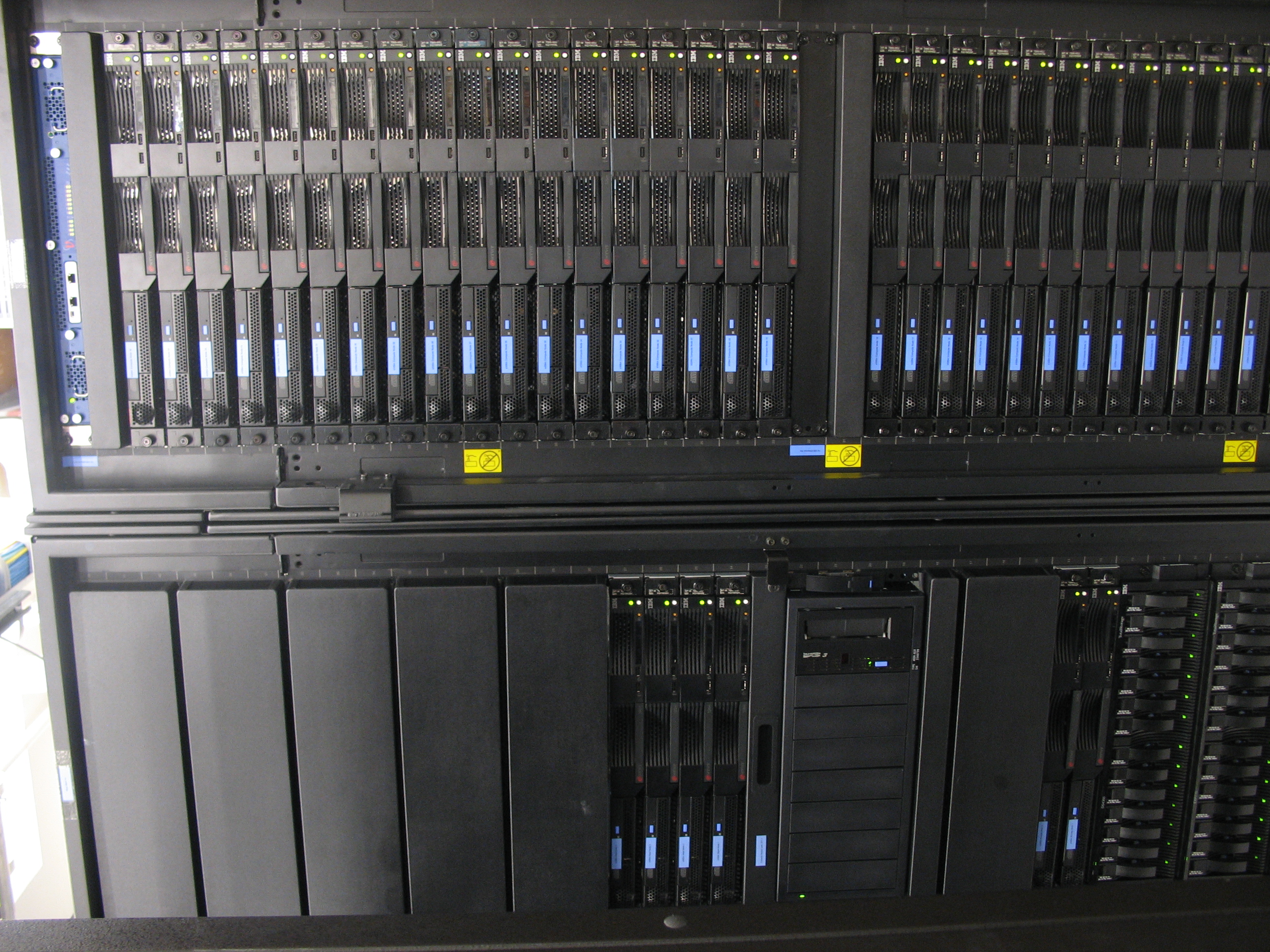
SLIM has recently purchased a 144-CPU cluster that will greatly expand our seismic processing capabilities. Its specifications are listed below :
-
-
Compute nodes
-
36 x IBM eServer 326m (i.e., 144 CPUs). Each with:
-
-2 dual-core 2.2GHz Opteron processors (4 CPUs)
-
-8 GB memory (2 GB / CPU )
-
-Voltaire Infiniband x4 high-speed inter-proccesor network
-
-280 GB of local storage
-
-1Gb Ethernet
-
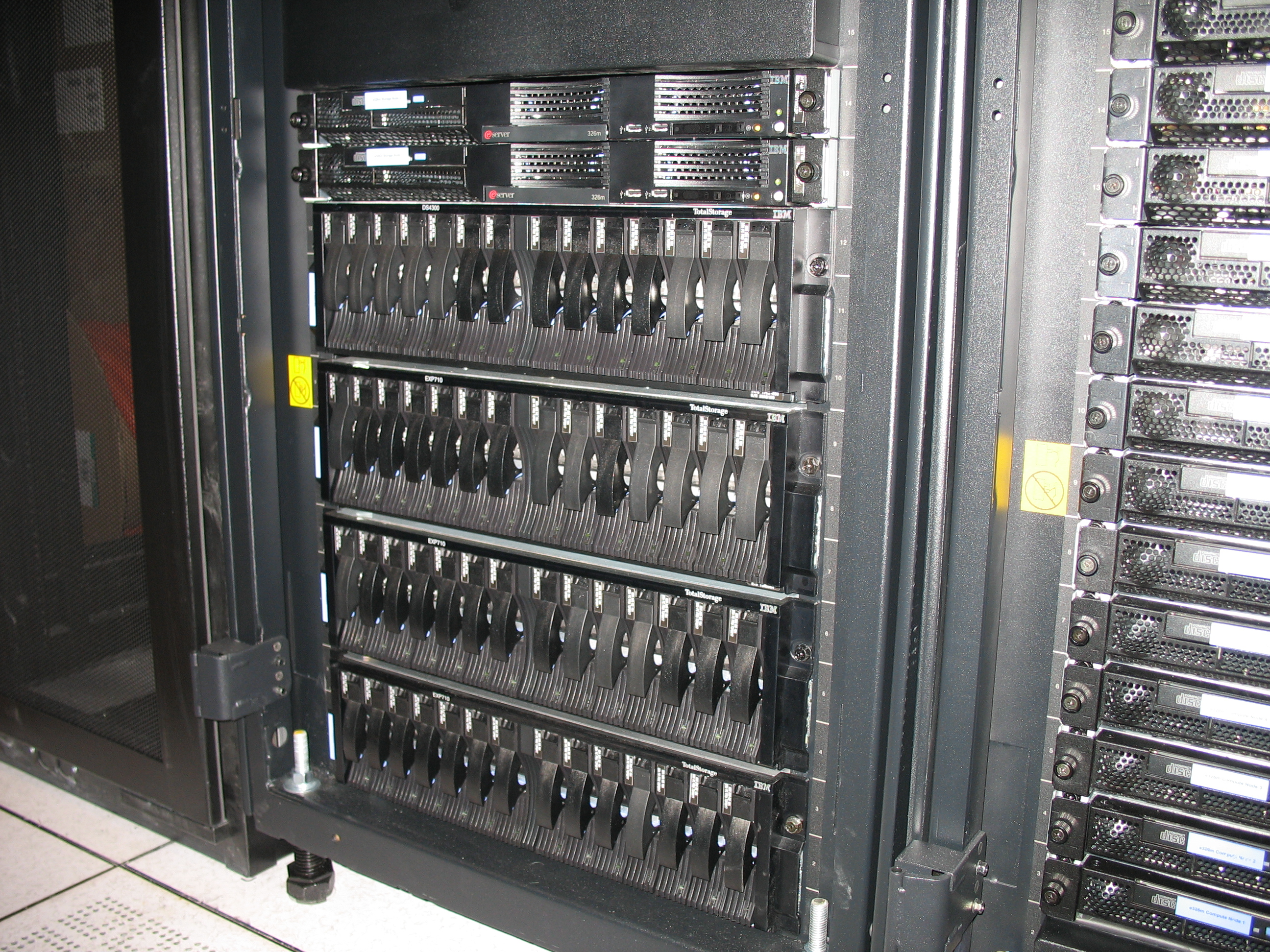
Storage
-
2 x IBM eServer 326m. Each with:
-
-2 dual-core 2.2GHz Opteron processors (4 CPUs)
-
-4GB memory (1 GB / CPU )
-
-12.1 TB of effective storage
-
-dual 1Gb Ethernet
-
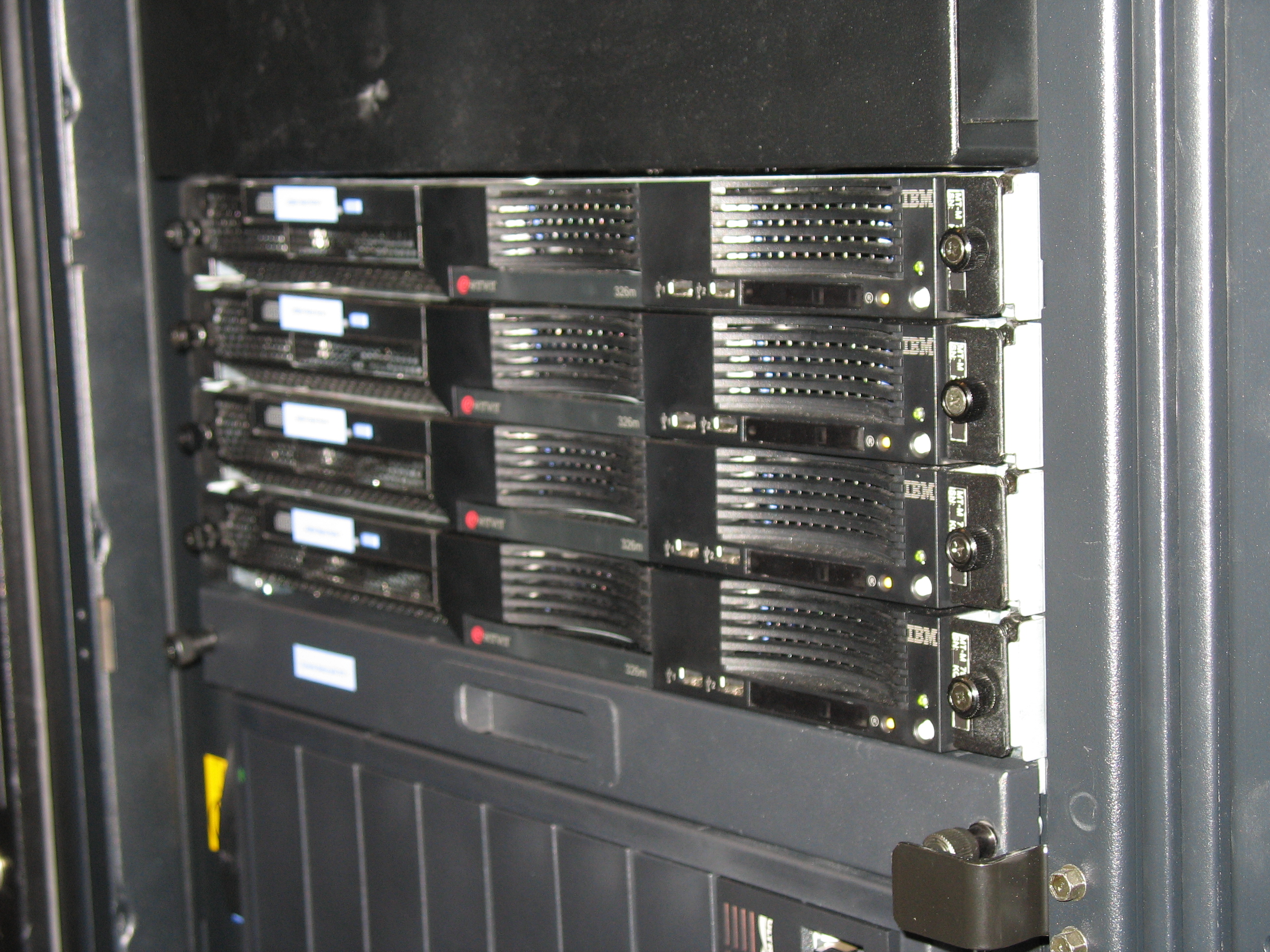
Login nodes
-
3 x IBM eServer 326m. Each with:
-
-2 dual-core 2.2GHz Opteron processors (4 CPUs)
-
-8 GB memory (2 GB / CPU )
-
-1Gb Ethernet
-
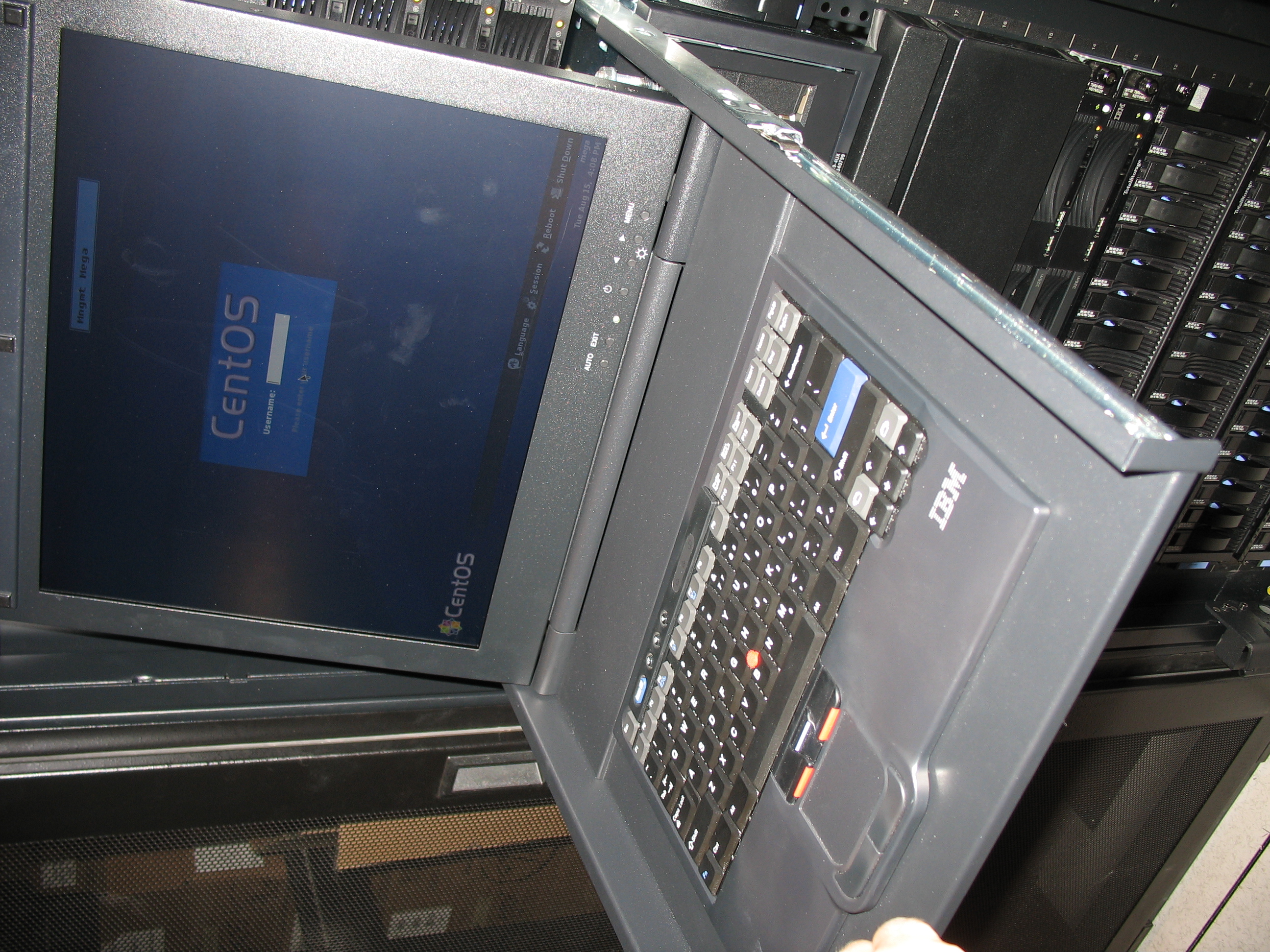
Management node
-
IBM eServer 326m with:
-
-2 dual-core 2.2GHz Opteron processors (4 CPUs)
-
-4GB memory (1 GB / CPU )
-
-1Gb Ethernet
-
-
Pictures
-
-
-
-
-
-
-
-
-
-
-
-
-